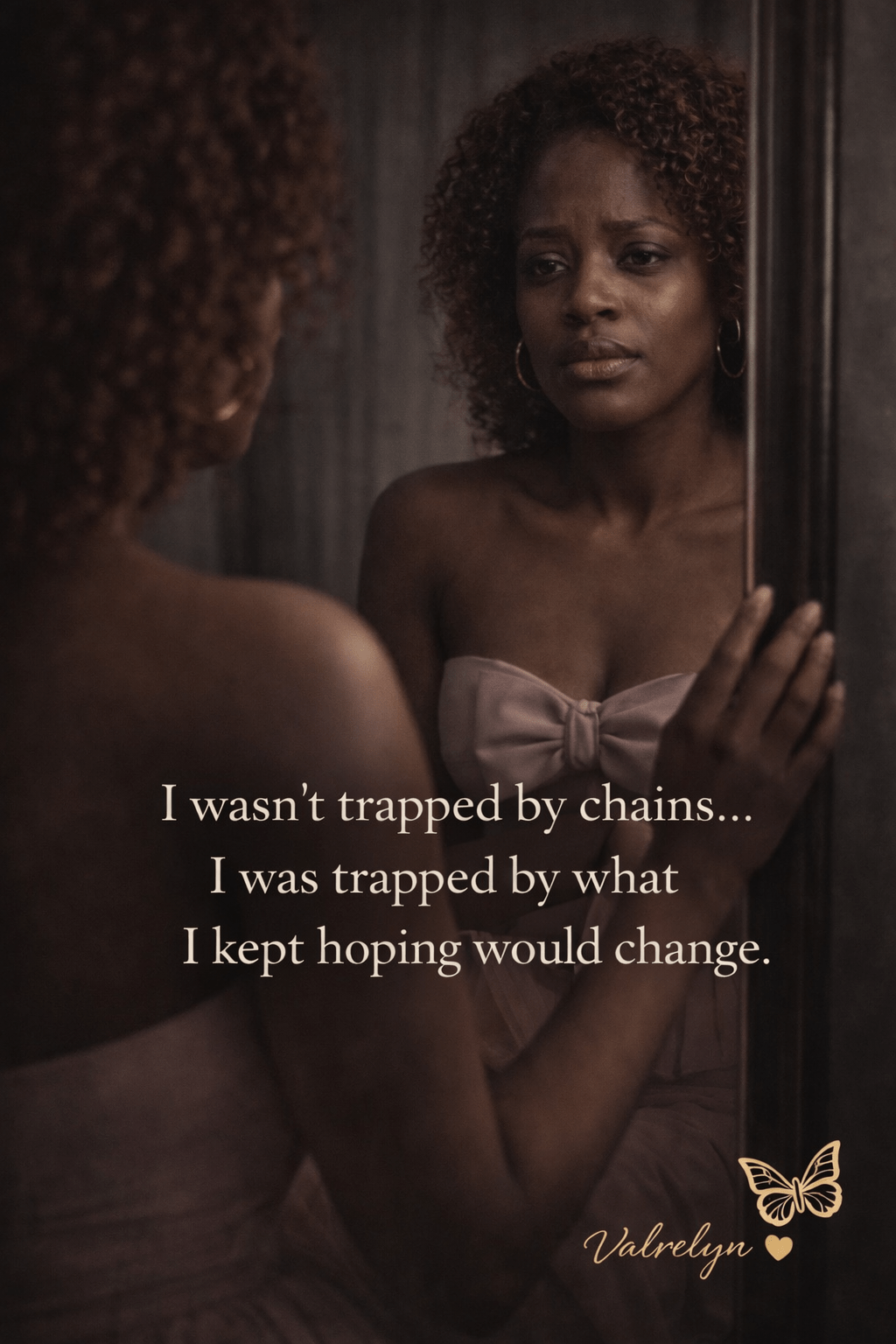
A Prisoner of War
A hostage situation does not always involve guns, handcuffs, or barricaded rooms.
Sometimes it looks like a child sitting quietly on a bed, listening to raised voices through thin walls. Sometimes it sounds like doors slamming, objects breaking, threats whispered instead of shouted. Sometimes it feels like holding your breath, wondering which version of your parents will emerge next.
This is what it is like to be a prisoner of war between your parents.
When you grow up in a home at war, you are never neutral. Even when you are silent, you are still being used. Love becomes conditional. Safety becomes temporary. And loyalty is demanded, not earned. You learn quickly that choosing one parent—even emotionally—means betraying the other. So you learn not to choose at all.
You become the pawn on the board.
Moved strategically. Positioned carefully. Sacrificed without warning.
There are no winners in this game. Only survivors—and even then, survival comes at a cost.
Used as a Weapon
In a home at war, children are often the most effective weapons. We are used to carry messages, to spy, to report, to validate one parent’s version of the truth. We are asked questions that feel harmless on the surface but carry landmines beneath them.
What did your mother say about me?
Does your father still see her?
Who do you love more?
Every answer feels dangerous. Every silence feels suspicious.
So you learn how to respond in ways that keep the peace—at least temporarily. You tell each parent what they want to hear. You downplay. You soften. You edit the truth until it feels small enough not to explode.
But the truth doesn’t disappear. It embeds itself.
And over time, carrying what does not belong to you begins to shape who you become.
The Invisible Chains
Being a prisoner of war does not end when the fighting stops. The chains are invisible, but they are strong.
You grow up hyper-aware of moods, tone changes, emotional shifts. You become skilled at anticipating conflict and avoiding it at all costs. Or, just as often, you unknowingly recreate it—because chaos feels familiar, and familiarity feels like home.
Many prisoners of war grow up to marry abusers.
Others become them.
Not because they want to—but because the blueprint for love they were given was built in violence, control, silence, and fear. When dysfunction is all you’ve ever known, peace can feel boring, unsafe, or undeserved.
You may find yourself drawn to relationships that mirror the war you survived—partners who belittle, manipulate, or dominate. Or you may become the one who lashes out, who wounds before being wounded, who controls in order to feel safe.
These are not character flaws.
They are battle scars.
How the War Shapes Our Choices
The aftermath of being a hostage shows up everywhere:
- In the relationships we choose
- In the boundaries we don’t set
- In the fear of abandonment that governs our decisions
- In the need to please, fix, or rescue others
- In the belief that love must hurt to be real
Many of us live our lives trying to earn what should have been freely given.
We confuse intensity with intimacy.
We mistake control for care.
We endure what should never be tolerated because endurance once kept us alive.
The war taught us how to survive—but it did not teach us how to live.
Breaking Free
There comes a moment—sometimes quiet, sometimes violent—when a former prisoner realizes the truth:
I am not bound anymore.
The war may have shaped us, but it does not get to sentence us. Awareness becomes the first key. Naming the trauma becomes the second. Healing begins when we stop blaming ourselves for adaptations that once protected us.
Freedom does not come from pretending the war didn’t happen.
It comes from refusing to let it define the rest of our lives.
A Closing Reflection
If you were a child caught between two parents at war, you were not weak—you were strategic. You were not broken—you were surviving. And if you now see traces of that war in your adult relationships, it does not mean you are doomed to repeat it.
It means there is still healing to be done.
The hostage can be released.
The prisoner can walk free.
And the war does not have to continue through you.
This is the cost of being a pawn in a game with no winners.
And this is where the cycle can finally end.
 N8tivegirl
Leave a comment